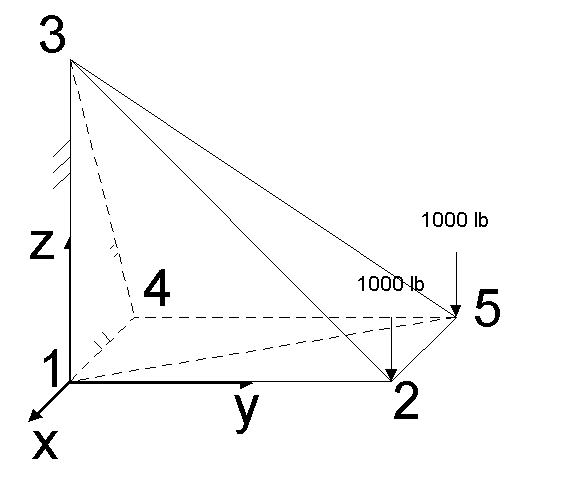
Example on Tetrahedral Element


enter the nodal coordinates


element 1: nodes: 1,2,3,5
element 2: nodes: 1,3,4,5


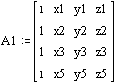


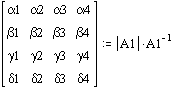
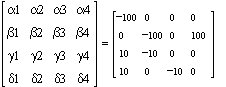
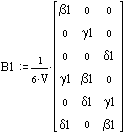
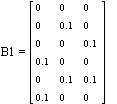
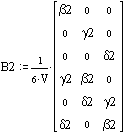
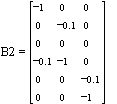
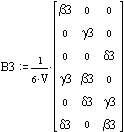
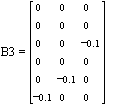
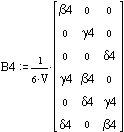
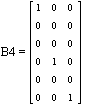



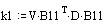
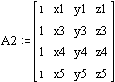


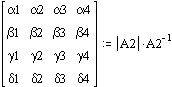
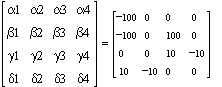
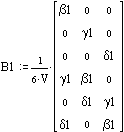
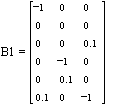
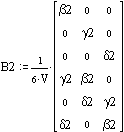
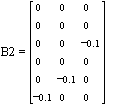
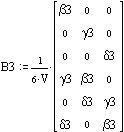
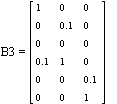
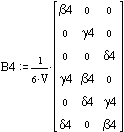
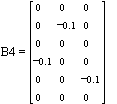



Expand the matrices
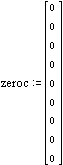


Divide k1




Expand k1












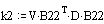
Divide k2




Expand k2













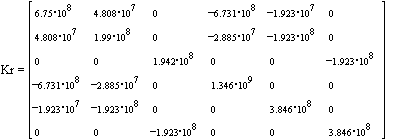
Reduce the matrix: Keep the rows and columns for nodes 2 and 5 only







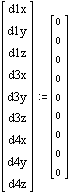
Boundary conditions
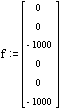
Force Matrix

Reduced force matrix
Solve for the displacement unknowns
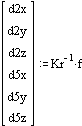
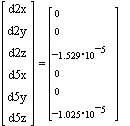
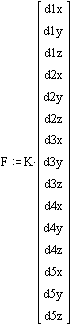
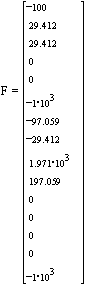
Solve for the force unknowns
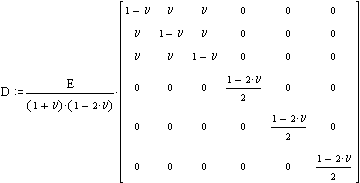
Stresses in element 1
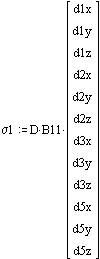
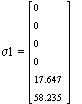
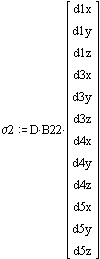
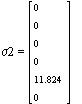
Stresses in element 2